

Homeopathy Treatment for Hordeolum
Styes/Hordeolum
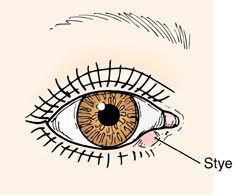
A stye is a pimple or abscess on the upper or lower edge of the eyelid. It is a sign of an infected eyelid gland. The bacteria which are involved are usually Staphylococcus aureus. A stye is a red tender bump on the eyelid that is caused by an acute infection of the oil glands (sebaceous glands) of the eyelid.
Styes are usually harmless and rarely affect your eye or sight. Styes can occur at any age and tend to recur elsewhere in the lid. Styes are not contagious. Styes can occur at any age group and equally affects males and females.
A stye is sometimes confused with a chalazion, which is a cyst or a specific type of scarring (due to chronic inflammation) arising in the meibomian glands of the eyelid. In contrast to a sty, a chalazion is usually painless.
Types of styes
There are two types of styes:
- External (on the outside of the eyelid) and
- Internal (on the underside of the eyelid).
Book an Appointment
Causes of Stye
Styes are caused by staphylococcal bacteria. This disease appears due to debilitated condition of the system. A stye occurs when staphylococcal bacteria infect one of the tiny glands at the base of the eyelid hairs and then becomes inflamed.
Risk factors
- A stye can be a symptom of other ailments such as diabetes and chronic skin problems, chronic blephritis etc.
- Studies have shown that those who have high levels of blood lipids are more susceptible to blockages in the oil glands, including those of the eyelid and, therefore, are more likely to develop a sty.
- Stress seems to trigger the development of a sty.
Symptoms
The symptoms include the following:-
- Frequent watering in the affected eye,
- A feeling like something is in the eye or increased light sensitivity.
- pain in the eye or eyelid, especially when blinking or to the touch -redness of the eyelid itself
- Lump and/or swelling in the eyelid
- Blurred vision
- Discomfort when blinking
- Tenderness in the area of swelling
Complications of Styes
Complications of a sty are rare. The infection may spread to other eyelash follicles, leading to multiple Styes. A chalazion (a form of scarring of the glands in the eyelid that may include the formation of cysts) is the most common complication that develops from a sty. Chalazia can be large enough to deform the cornea of the eye and interfere with vision, and they may cause a cosmetic problem.
Other potential complications include a generalized infection (cellulitis) of the eyelid, and improper drainage of a sty may lead to deformity or disruption of eyelash growth. Progression of a sty to a systemic infection (spreading throughout the body) is extremely rare, and only a few instances of such spread have been recorded.
Prevention of Styes
While it is impossible to completely prevent the development of a stye, good hygienic practices, including proper hand washing, can help prevent all forms of infection, including a sty. Other measures that can help prevent Styes include.
- Never sharing cosmetics or cosmetic eye tools (such as lash curlers or eyelash combs) with others
- Keeping eye tools clean
- Discarding old or contaminated eye makeup
- Keeping all cosmetics clean
- Not touching the eye and surrounding areas.
Home-Remedies
- Guava leaves, warmed and placed on a warm damp cloth, and then used as a compress; reduce the redness, pain and swelling in eyes.
- Gently scrub the eyelid with tap water or with a mild, nonirritating soap or shampoo (such as baby shampoo). This may help with drainage. Close your eyes as you scrub so you do not injure your eyes.
- Boil 1 teaspoon of coriander seeds with a cupful of water like an herbal tea preparation to wash the eyes 3-4 times a day.
- Apply warm compresses 4-6 times a day for about 15 minutes at a time to help the drainage. Keep your eyes closed.