

Homeopathy Treatment for Ulcerative Colitis
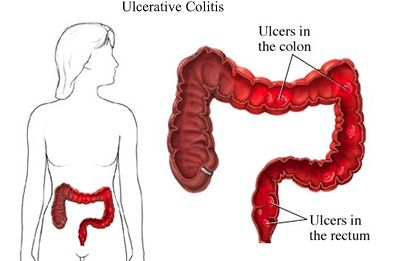
Ulcerative colitis is a chronic inflammation of the large intestine (colon). In patients with ulcerative colitis, ulcers and inflammation of the inner lining of the colon lead to symptoms like pain in abdomen, constant diarrhea mixed with blood to an extent that the patient cannot stay out of the toilet or will think of where the toilets are located before leaving for an outing. The colon is the part of the digestive system where waste material is stored. The rectum is the end of the colon adjacent to the anus. In this the gastrointestinal tract becomes inflamed and weak, making digestion difficult and leading to general physical debility. Ulcerative colitis has a gradual onset.
Ulcerative colitis, also called Colitis ulcerosa or UC is a form of inflammatory bowel disease that includes characteristic ulcers, or open sores, in the colon. Ulcerative colitis is an intermittent disease, with periods of exacerbated symptoms, and periods that are relatively symptom-free.
Ulcerative colitis is closely related to another condition of inflammation of the intestines called Crohn’s disease (CD). Together, they are frequently referred to as inflammatory bowel disease (IBD). Ulcerative colitis and Crohn’s diseases are chronic conditions that can last years to decades. They affect approximately 500,000 to 2 million people in the United States. The main difference between UC and CD is the area of the digestive tract they affect — CD can occur along the entire digestive tract and spread deep into the bowel wall. In contrast, UC usually only affects the top layer of the large intestine.
About 1 in 1000 people in the UK develops UC. It can develop at any age but most commonly first develops between the ages of 15 and 40. About 1 in 7 cases first develop in people over the age of 60.
Ulcerative colitis can occur in people of any age, but it usually starts between the ages of 15 and 40 and less frequently between 50 and 70 years of age. It affects men and women equally and appears to run in families, with reports of up to 20 percent of people with
ulcerative colitis having a family member or relative with ulcerative colitis or Crohn’s disease.
It is found worldwide, but is most common in the United States, England, and northern Europe. It is especially common in people of Jewish descent. Ulcerative colitis is rarely seen in Eastern Europe, Asia, and South America, and is rare in the black population. For unknown reasons, an increased frequency of this condition has been recently observed in developing nations like India.
Book an Appointment
What Causes Ulcerative colitis?
No one knows what causes ulcerative colitis. The theories suggest various intrinsic and extrinsic factors responsible for ulcerative colitis.
Intrinsic or internal factors include:-
Hereditary factors/genetic factors- it is seen that if there is immediate family member having ulcerative colitis, then your chances of having the disease increases.
Faulty immune-system– it is believed that it is responsible for the inflammation of the colon.
The disturbance is thought to be either of two.
Allergy: studies suggest that Ulcerative colitis is a form of increased allergic response to certain food or to the presence of some microorganisms in the intestine.
Autoimmunity: Most recent research indicate that ulcerative colitis can be a form of autoimmune disease in which body’s defense system starts attacking body’s own organs and tissues. So in UC colon is being attacked.
Extrinsic or external factors/ triggering factors include:-
Diet– certain foods items are known to trigger UC like junk food, dairy products etc.
Infection– studies suggest that certain bacterial and viral infections like CMV (cytomegalo virus) are known to trigger UC.
Drugs– recent research shows that certain drugs like antibiotics, aspirin, contraceptive pills; NSAID’s are known to flare up UC.
How is ulcerative colitis (UC) diagnosed?
If you suspect you have UC, talk to your doctor. With the help of a detailed history and physical examination will help a physician diagnose ulcerative colitis.
Tests used to diagnose UC include:
- Blood tests: A sample of blood is studied in a lab to find signs of inflammation and anemia.
- Stool sample: A sample of a bowel movement is tested for blood or infection.
- Barium Enema: The doctor injects fluid containing a substance called barium into the rectum. The barium allows the doctor to see the colon on an x-ray. Using this x-ray, doctors can “see” if there are any ulcers or other signs of UC.
- Flexible Sigmoidoscopy: The doctor puts a thin tube with a light into the rectum. It allows the doctor to check the rectum and the lower part of the colon for signs of UC.
- Colonoscopy: The doctor puts a thin tube with a light through the rectum and into the colon. This allows her to “see” the lining of the whole colon and check for signs of UC.
Symptoms of Ulcerative Colitis
Symptoms vary. They may be mild or very severe. They may come on suddenly or develop gradually. In some people the severity of the symptoms may vary with the season–worse in winter and less in summer.
Three classic symptoms of ulcerative colitis are:
- Persistent or recurrent diarrhea -in ulcerative colitis this diarrhea is often bloody or full of mucus. When severe, the patient cannot stay out of the toilet. The disorder typically begins gradually, with crampy abdominal pain and diarrhea that is usually bloody.
- Abdominal pain -in ulcerative colitis is often crampy in nature and most intense immediately before a bowel movement.
- Fever
Other symptoms may include fatigue, weight loss and loss of appetite.
UC can cause a number of problems outside of the colon including:
- joint pain or arthritis,
- inflammation in the eye,
- liver and bile duct disease,
- skin rashes
- anemia, and
- Kidney stones.
How is ulcerative colitis (UC) diagnosed?
If you suspect you have UC, talk to your doctor. With the help of a detailed history and physical examination will help a physician diagnose ulcerative colitis.
Tests used to diagnose UC include:
- Blood tests: A sample of blood is studied in a lab to find signs of inflammation and anemia.
- Stool sample: A sample of a bowel movement is tested for blood or infection.
- Barium Enema: The doctor injects fluid containing a substance called barium into the rectum. The barium allows the doctor to see the colon on an x-ray. Using this x-ray, doctors can “see” if there are any ulcers or other signs of UC.
- Flexible Sigmoidoscopy: The doctor puts a thin tube with a light into the rectum. It allows the doctor to check the rectum and the lower part of the colon for signs of UC.
- Colonoscopy: The doctor puts a thin tube with a light through the rectum and into the colon. This allows her to “see” the lining of the whole colon and check for signs of UC.
Stress and Ulcerative Colitis
Mind plays a vital role in maintaining a healthy or diseased condition of the body. Recent studies has accepted the fact that any kind of emotional stress has definite detrimental effect on the immune system and hence can be the root cause of chronic disease like ulcerative colitis. When someone is under stress, the body gears up for a fight-or-flight response by secreting certain hormones, including adrenalin, as well as molecules called cytokines. They stimulate the immune system, which triggers inflammation. .In people whose ulcerative colitis is in remission, this sets the stage for the return of their symptoms, known as a flare-up.
Complications of ulcerative colitis |
- Life threatening bleeding
- Perforation of the intestines and inflammation of the abdominal cavity
- Malnutrition
- Involvement of the joints, eyes, skin
- Colon Cancer: The risk for development of colon cancer increases after 10 years of ulcerative colitis.
- Primary Sclerosing Cholangitis: An inflammatory disorder of the small and large bile ducts tends to be progressive in nature.
- C-Reactive Proteins: Raised levels are indicative of an active inflammatory process in the body.
Allopathic or conventional treatment of ulcerative colitis
The conventional treatment consists of giving combination of large number of medicines which will leave the patient with lot many side-effects and a condition which is even worse than the Ulcerative colitis itself.
The various medicines prescribed and their side-effects are:-
Steroid medicines
Steroid medicines are employed to reduce inflammation like prednisone; prednisolone, hydrocortisone, and methylprednisolone are the most common corticosteroids. These drugs are administered orally, intravenously, by injection, by enema, or by suppository.
Side-effects are:-
- increased rate of infection or decreased immunity
- weight gain
- acne
- hypertension
- accelerated osteoporosis
- diabetes (type 2)
- cataracts or glaucoma
- menstruation irregularities
- a whole slew of emotional disorders: irritability, insomnia, psychosis, and depression
5-ASA Compounds
A number of medications used to treat ulcerative colitis all have as their active ingredient 5-aminosalicylic acid (5-ASA). These include sulfasalazine (trade name Azulfadine), a compound that has been used for more than half a century.
Side Effects are:-
- diarrhea
- nausea
- cramping
Immunosuppressive Drugs (immunomodulator)
The most common examples of immunosuppressive drugs are azathioprine (AZA), Imuran, 6-mercaptopurine (6-MP) (Purinethol).
Side Effects are:
- nausea, vomiting and diarrhea
- rash
- malaise
- liver inflammation
Tumor Necrosis Factors (TNF) Modifiers
Infliximab (Remicade) is an antibody or biologic response modifier that interferes with the body’s inflammatory response. These drugs target the inflammatory immune factor of a molecule called tumor necrosis factor or TNF.
Infliximab (Remicade) Side Effects to Hate:
- nausea, fever, dizziness, chills
- headaches
- rash
- hives
- low blood pressure
- labored breathing
- pruritus (sensation of itching)
- There may be an increase risk of lymphoma or cancer of the lymph glands. Studies are currently being conducted to determine the link between taking infliximab and lymphoma.
Surgery
Surgery– This is the last option with the allopaths.There is only one surgical treatment for ulcerative colitis. That is total colectomy, which is removal of the colon. This surgical procedure cures the disease, since the diseased organ is removed. But this surgery is life altering, since other methods must be used after the surgery for elimination of the waste from the body which significantly affects the life style of a patient.
Homeopathy and ulcerative colitis (UC) diagnosed?
Homeopathy is an elaborate and very detailed medical science based upon the principle of stimulating the body to heal itself.
Homeopathy has good scope in the treatment of Ulcerative Colitis especially in the early stages of the condition. The goals in treating ulcerative colitis are to eliminate symptoms, prevent flare-ups (maintain long-term remission) and restore the quality of life.
Research shows that homeopathy offers effective treatment for Ulcerative Colitis, which has been scientifically documented. Homeopathy is very safe and can be combined with the conventional treatment/allopathic treatment if required.
For most people, going out to eat or visiting a friend’s house is a pleasurable activity. But for those with ulcerative colitis, the need to learn ahead of time where the bathrooms are located, or the fear of not reaching on time, can turn simple pleasures into anxiety-filled events.“Because they have special needs, people with ulcerative colitis can start thinking of themselves as outcasts”. All this stresses the patient. These patients are usually tired of taking various steroids and other allopathic medicines. A quantity of people never gets treated for Colitis because they believe that nothing can be done. The only solution to their problems is Homeopathic treatment.
How Homeopathy works on UC patients
Homeopathic treatment for Ulcerative Colitis is based on the concept of immuno-correction. While choosing the homeopathic medicine the cause of various symptoms like bloody stools, persistent diarrhea, crampy pain in abdomen etc. evaluated such as dietary errors, faulty feeding habits, mental stress and so on. Proper prescription of homeopathic medicines makes the immune system work more efficiently. Homeopathic Constitutional treatment will reinforce the immune system by escalating the number of specialized white blood cells called T-lymphocytes that are vital in the body’s defense against certain bacteria and fungi, assisting in making antibodies, and facilitating in the recognition and rejection of foreign tissues.
Homeopathic medicines work as a powerful anti-inflammatory medicines which will help in reducing the frequency of stools, the urging and discomfort associated with the condition, the passage of mucus and blood in the stools, etc. This way homeopathy will help the patients gradually reduce the various steroidal and immunosuppressive drugs which they have been taking for a long time.
Homeopathic medicines also help in slowing down the progress of the disease and the development of complications. The treatment can help in inducing d can also assist in improving the immunity so that the patient does not face frequent relapses. Homeopathic medicines also improve mental and physical stress, and alter the hereditary predisposition to the disease.
At a later stage of the disease when structural changes have taken place in the body, Homeopathy has a palliative role to play in this disease reducing the need for steroids and other immunosuppressive medication.
The remedies soothe and recover the digestive function allowing improved absorption and assimilation of nutrients from food. The nutritional status of the patient also improves with regular Homeopathic medication.
Homeopathy can also help to prevent the need for surgery in cases of Ulcerative Colitis, if the treatment is opted for at the right time.
Homeopathic medicines for ulcerative colitis are non-habit forming and have no addictive characteristics.
Homeopathic treatment comprehensively will help improve the quality of life.
MANAGEMENT OF ULCERATIVE COLITIS
DIET ADVISED- It is important to self- manages ulcerative colitis with healthy lifestyle habits and a nutrient-rich diet. Paying attention to your nutrition is especially important with GI diseases because the symptoms of diarrhea and bleeding can lead to dehydration, electrolyte imbalance, and loss of essential nutrients. That can lead to a host of problems such as fatigue, weakness, and anemia.
- The food items advised for the patients– Eating with ulcerative colitis should be based on a well-balanced diet that’s high in protein, complex carbohydrates, whole grains, and good fats. Such a diet will provide you with energy and keep you well. Your diet may include meat, fish, poultry, and dairy products (if you don’t have lactose intolerance); breads and cereals; fruits and vegetables; and margarine and oils. Eat small meals and drink plenty of fluids.
If you are a vegetarian with ulcerative colitis, dairy products and plant proteins — such as soy products — can provide the nutritional elements found in meat, fish, and poultry.
Food items to be avoided-Learning to avoid food triggers may give you better control of your disease and allow you greater freedom to enjoy an active life. Despite the fact there is no scientific proof; many people with ulcerative colitis have found that one or more of the following foods can trigger their GI symptoms:
- alcohol
- caffeine
- carbonated beverages
- dairy products, if lactose intolerant
- dried beans, peas, and legumes
- dried fruits, berries, fruits with pulp or seeds
- foods containing sulfur or sulfate
- foods high in fiber, including whole-grain products
- hot sauce, pepper
- meats
- nuts, crunchy nut butters
- popcorn
- products containing sorbitol (sugar-free gum and candies)
- raw vegetables
- refined sugar
- seeds
- spicy foods, sauces
HOME-REMEDIES
- Raw cabbage juice is excellent for UC. Taking half a glass of it 30 min. before the meal is very helpful
- Raspberry juice before meals helps preventing internal bleedings.
- Take oat-meals.
- Relaxation techniques, such as yoga, tai chi, and meditation, particularly for people with chronic stress in their lives